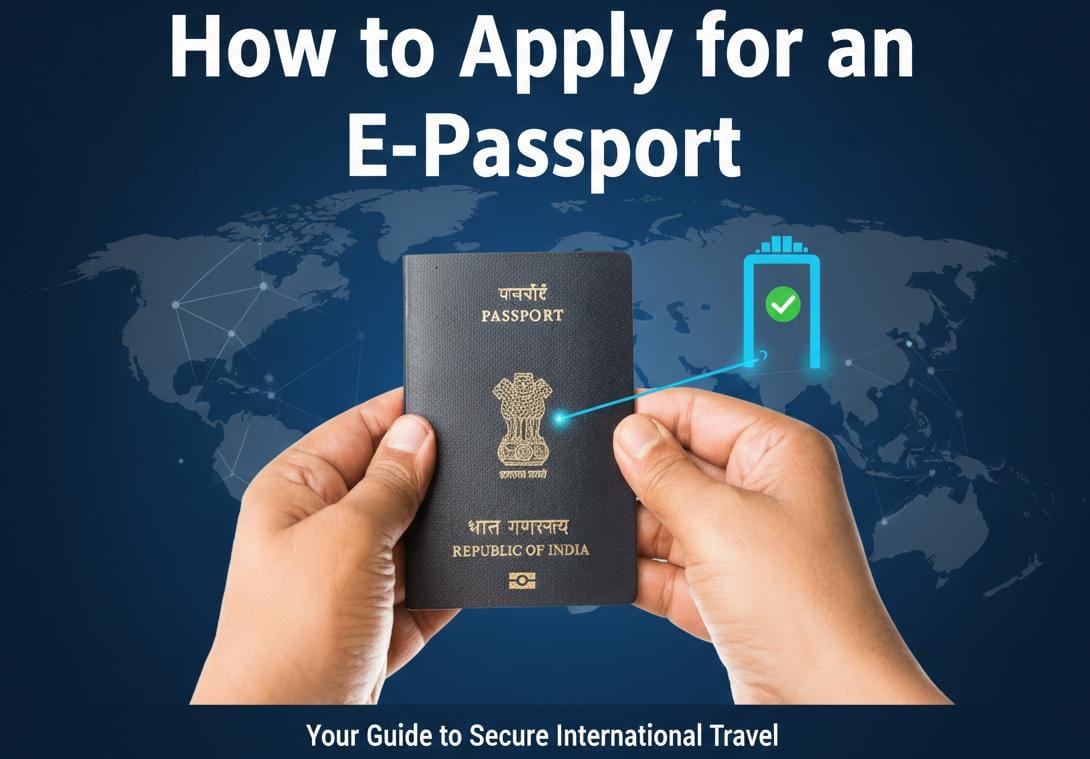
India now issues electronic passports – those with a built-in chip – for fresh requests and replacements. When heading overseas soon or facing an expiry on your present document, follow this straightforward walkthrough tailored for securing your e-Passport in India by 2026.
What is an e-Passport?
A small computer chip hides inside what seems like a regular passport book. Inside that chip lives details about you – fingerprints, face shape, things like name and birth date. Information stays locked there, ready when needed.
Benefits: Getting through airport checks more quickly stands out as a key advantage. Security improves because verification becomes tougher to trick. Faking the system turns into something that almost cannot happen.
At the PSK, your fingerprints and a digital photograph will be taken for the e-Passport chip.
Step 5: Police Verification & Delivery
After your visit, your file is sent to the local police station for verification (you will get a paper from passport office, in that you will get your tracking details you can check on passport seva official website).
A police officer will visit your residence to verify your identity.
Once the “Clear” report is submitted, your e-Passport will be printed and sent to your registered address via Speed Post.
Key Things to Remember for 2026
Validity: Most adult passports are valid for 10 years.
e-Passport Upgrade: If you already have non-chip passport, you don’t need to change it immediately; it remains valid until its expiry date.
DigiLocker: You can now use DigiLocker to share your documents digitally during the application process to save time.
If you’ve been scrolling Instagram or TikTok this week, you’ve likely seen these stunning hyper-realistic portraits: a beautiful woman in a luxurious […]