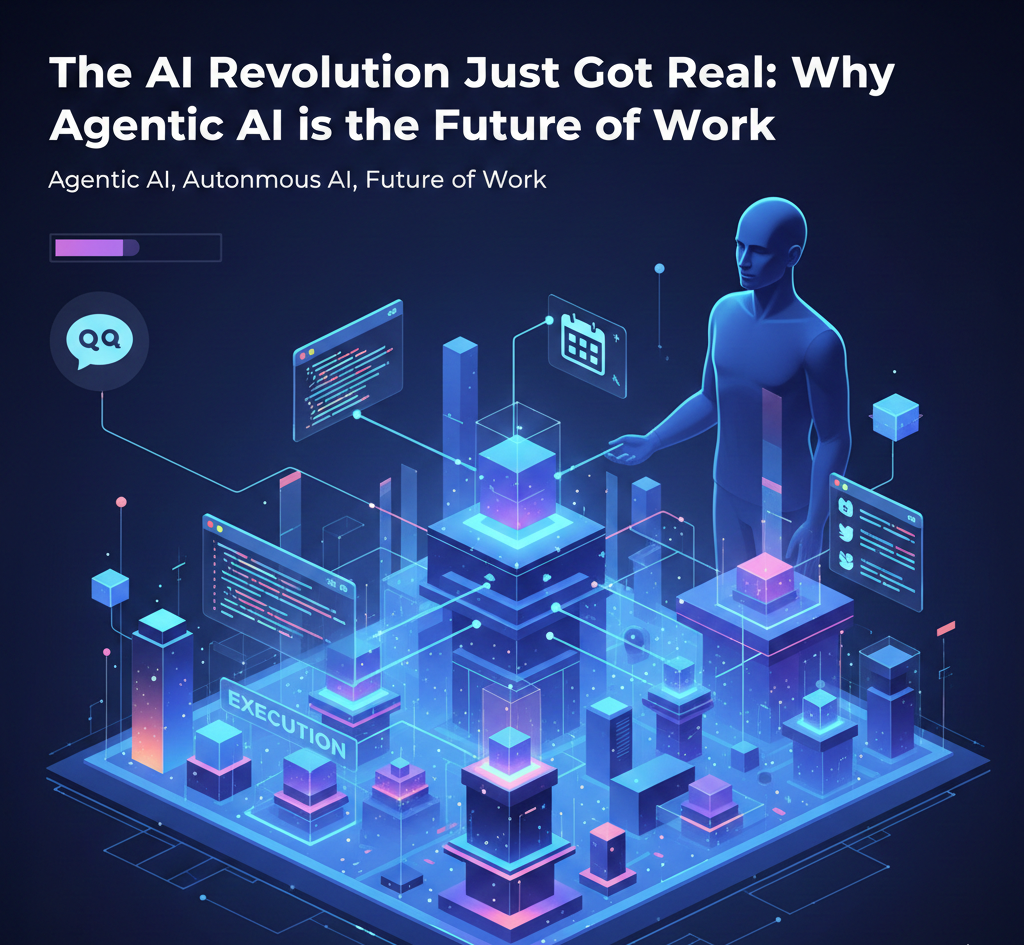
Back then, everyone kept staring at chatbots typing answers like magic. Just the beginning, really. By 2026, everything flipped – no more testing, only doing. Talking faded out; actions took over. Meet Agentic AI – the quiet turn where machines stopped waiting and started moving.
Now it’s less about clever prompts. These systems act independently, built to handle jobs by themselves. Because they adapt through experience, they shift course based on what happens around them. While people step back, these tools push toward targets quietly. Imagine helpers who check emails, rearrange calendars, run scripts. When needed, they talk with others, striking deals like seasoned reps. Their strength lies in moving forward without being told every single step.
This changes how you show up every day – reshapes your role, shifts the way teams operate. Picture different rhythms, new patterns across tasks and time. It pulls at old routines until something else takes hold.
One way to get Agentic AI is by comparing it to the Generative AI most people already know
Generative AI (e.g., ChatGPT, Midjourney): Starts by turning prompts into written output. This one helps spark ideas, shape early drafts, work through connections. Always sits ready for whatever comes next.
Agentic AI: Starting on its own, this system blends creating new content with independent thinking. Because it plans ahead, it handles tasks without constant guidance. When given a broad objective, it splits the work into pieces, then decides which to tackle first. As obstacles appear, it adjusts course using different resources – like online queries or data systems – to move forward. Even when stuck, it finds ways around problems. Doing more than reacting, it pushes progress by making choices.
Picture this: Rather than saying, “Write a marketing message about our latest item,” you say something like, “Run a full promotion for the new release, aimed at people who purchased X within half a year, using both email and social platforms.” That’s when the system takes off – organizing each step, crafting messages, setting post times, sending updates, tracking results, adjusting course as numbers come in.
The Key Components of an Agentic AI Workflow
At its heart, an AI agent typically consists of:
Goal Setting & Planning: Understanding a high-level objective and breaking it down into actionable steps.
Memory & Context: Remembering past interactions and maintaining context across multiple steps.
Tool Use: Accessing and utilizing external tools (web browsers, APIs, code interpreters, CRMs, etc.) to perform tasks.
Action & Execution: Taking concrete steps based on its planning and tool use.
Reflection & Self-Correction: Evaluating its own performance, identifying errors, and adjusting its strategy.
Round after round, that loop builds the strength and adaptability of Agentic AI – so it handles challenges way outside regular automated systems or basic generation tools.
While the promise of Agentic AI is immense, there are crucial considerations:
Ethical Deployment: Ensuring agents operate within ethical boundaries, avoid bias, and respect privacy.
Safety & Control: Designing robust “guardrails” to prevent unintended actions and ensure human oversight.
Transparency: Understanding how an agent arrived at a decision or executed a task will be paramount for trust and accountability.
Skill Shift: The workforce will need to adapt, moving from performing tasks to designing, supervising, and collaborating with AI agents.
Outweighing hurdles by a wide margin comes the potential. Those companies weaving Agentic AI into their plans see gains in speed, fresh ideas, leaving others behind. Attention moves past dull routines toward big-picture thinking, inventive approaches, solving issues with people at the core.
Right now, agentic AI exists – not some distant dream. This tech shifts quickly, changing how machines help. Instead of waiting for orders, systems take steps on their own. Picture artificial minds joining tasks like teammates. Progress pulls us toward that reality every day.
One thing is certain: Agentic AI won’t show up later – it’s already stepping into workflows. For companies and people alike, the moment to test, adjust, think differently has arrived. Not a matter of whether it appears, but how minds adapt alongside machines that act on their own. Discovery begins quietly, through small moves, repeated attempts, fresh angles. This shift doesn’t shout – it simply starts moving.